
 Horse Racing Betting Terms Explained: Win, Place and Other Common Markets
 2026-08-17
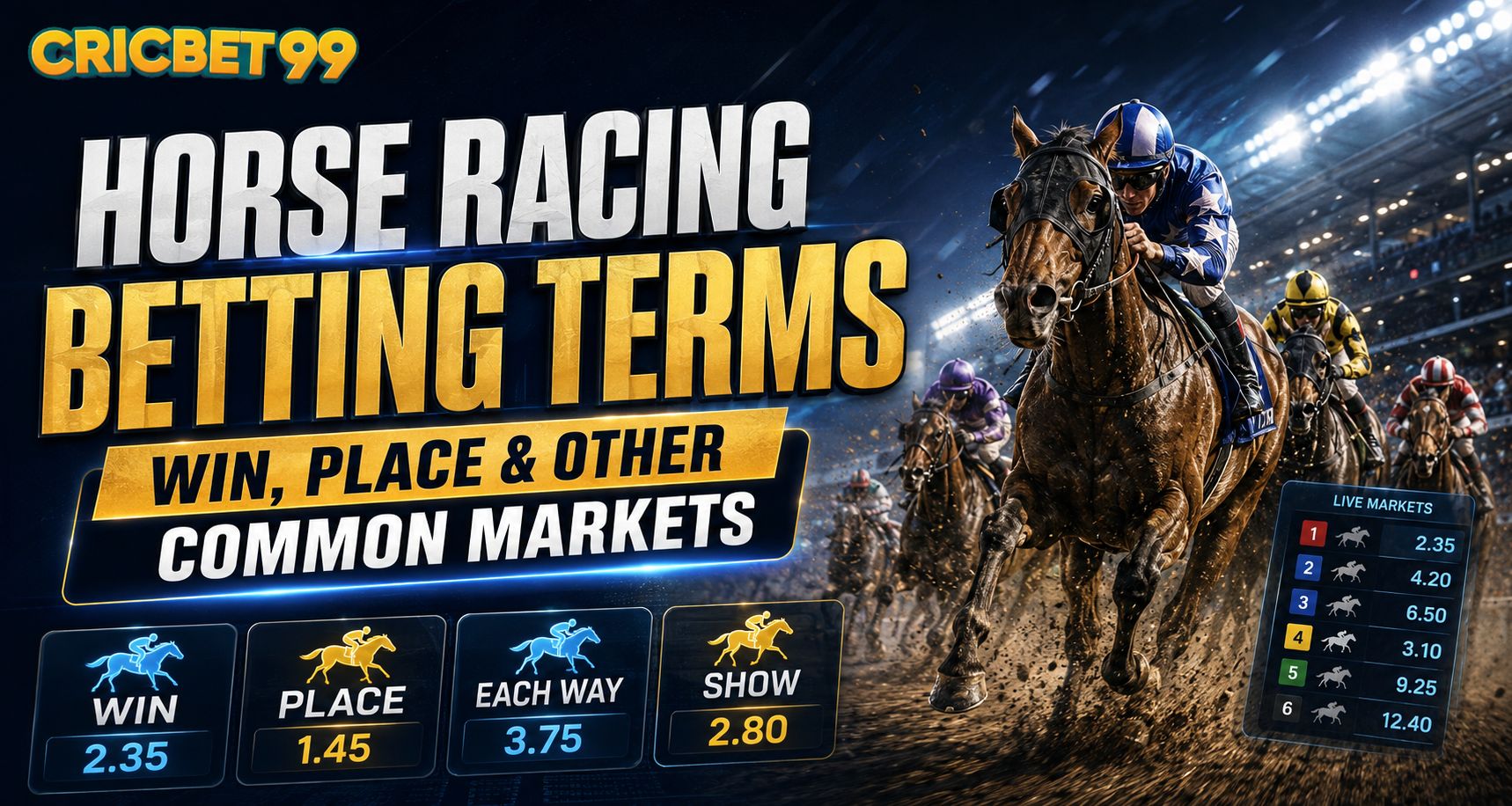
Horse racing comes with its own vocabulary, and understanding the basic terms can make race cards and market listings much easier to read. For users exploring racing information through Cricbet99, learning the difference between Win, Place, Each-Way and other common markets is an important starting point. These terms describe different possible outcomes and conditions attached to a race, so knowing what they mean can help users interpret markets more clearly before making any decision.
This guide explains the most common horse racing betting terms in simple language.
What Does “Win” Mean in Horse Racing?
A Win market is one of the simplest horse racing options. It means selecting a horse to finish first in the race.
If the selected horse wins, the selection is successful. If it finishes second, third or lower, the Win selection does not qualify.
Users checking racing events after a Cricbet99 Login may notice that every horse has different odds in a Win market. These odds generally reflect the market’s view of each runner’s chances.
Key points about Win markets include:
- The horse must finish first.
- Only the official result counts.
- A provisional result may change after a stewards’ inquiry.
- Dead heats may affect settlement depending on market rules.
What Does “Place” Mean?
A Place market allows a horse to qualify by finishing within a specified number of positions rather than necessarily winning.
The exact number of qualifying places depends on factors such as:
- Number of runners
- Race type
- Market rules
- Operator terms
For example, one race may count first and second as qualifying places, while another may include the first three positions.
When reviewing a Place market on Cricbet99 Com, users should always check the stated place conditions rather than assuming every race follows the same rule.
What Is an Each-Way Market?
An Each-Way selection usually combines two separate parts:
- One part on the horse to win
- One part on the horse to place
Because it contains two components, the total stake is generally divided between the Win and Place portions.
If the horse wins, both parts may qualify. If the horse finishes within the specified place positions but does not win, only the Place portion may qualify.
Each-Way rules can vary between races, especially regarding the number of places and place-related odds.
What Is a Show Market?
A Show market is commonly associated with horse racing in certain regions.
It generally means selecting a horse to finish within the first three positions. However, terminology and availability can differ depending on the racing jurisdiction or platform.
Anyone using Cricbet99 Online Betting features should read the market description carefully because “Place” and “Show” can have different meanings across different racing systems.
What Does Forecast Mean?
A Forecast market involves predicting the finishing order of multiple horses.
Common types include:
Straight Forecast
A Straight Forecast requires selecting the horses that will finish first and second in the exact order.
For example:
- Horse A must finish first.
- Horse B must finish second.
Reverse Forecast
A Reverse Forecast generally allows two selected horses to finish first and second in either order.
Forecast markets require greater precision than a standard Win or Place selection.
What Is a Tricast?
A Tricast requires predicting the first three finishers in the correct order.
For example:
- Horse A finishes first.
- Horse B finishes second.
- Horse C finishes third.
Because more finishing positions must be predicted accurately, Tricast markets are more complex than standard selections.
Availability can also depend on the race and local market rules.
What Is a Favourite?
The favourite is generally the horse with the shortest odds in the market. This suggests that the market currently considers it one of the most likely runners to win.
However, being the favourite does not guarantee victory.
Users examining markets on a Cricbet99 Betting Site should remember that odds can change before a race because of market activity, updated information or changing conditions.
Other Common Horse Racing Terms
Beyond the main market types, several other terms frequently appear in horse racing.
Starting Price
The Starting Price, often shortened to SP, is the official price associated with a horse when the race begins under the applicable racing system.
Non-Runner
A non-runner is a horse that was originally entered but does not participate in the race.
Dead Heat
A dead heat occurs when two or more horses cannot be separated at the finish for a particular position.
Stewards’ Inquiry
A stewards’ inquiry is an official review of an incident during the race. The finishing order may remain provisional until the investigation is complete.
Going
“Going” describes the condition of the racing surface. Examples may include firm, good, soft or heavy, depending on the racecourse and jurisdiction.
Why Market Rules Matter
Horse racing markets can look similar while having different settlement conditions.
Before interpreting any market, users should check:
- Number of qualifying places
- Dead-heat rules
- Non-runner rules
- Each-Way conditions
- Official-result requirements
- Market-specific settlement terms
Understanding these details can prevent confusion after a race finishes.
Conclusion
Horse racing becomes easier to follow once basic terms such as Win, Place, Each-Way, Forecast and Tricast are understood. Each market has different conditions, and the official race result usually determines the final outcome.
The most important habit is to read the specific market rules before relying on general assumptions. Place conditions, non-runners, dead heats and provisional results can all affect how a race market is interpreted.
Frequently Asked Questions
What is the difference between Win and Place in horse racing?
A Win selection requires the horse to finish first, while a Place selection usually qualifies if the horse finishes within a specified number of leading positions.
What does Each-Way mean?
An Each-Way selection normally combines a Win part and a Place part, with separate conditions applying to each portion.
What is a Straight Forecast?
A Straight Forecast requires predicting the first and second horses in the exact finishing order.
What does SP mean in horse racing?
SP stands for Starting Price, which refers to the official price associated with a runner when the race starts under the relevant system.
What happens if two horses finish together?
If officials cannot separate them, the result may be declared a dead heat. Settlement then follows the applicable dead-heat rules.
Why should I wait for the official race result?
A finishing order can remain provisional if there is a stewards’ inquiry or objection. The official result is normally used for final settlement.