
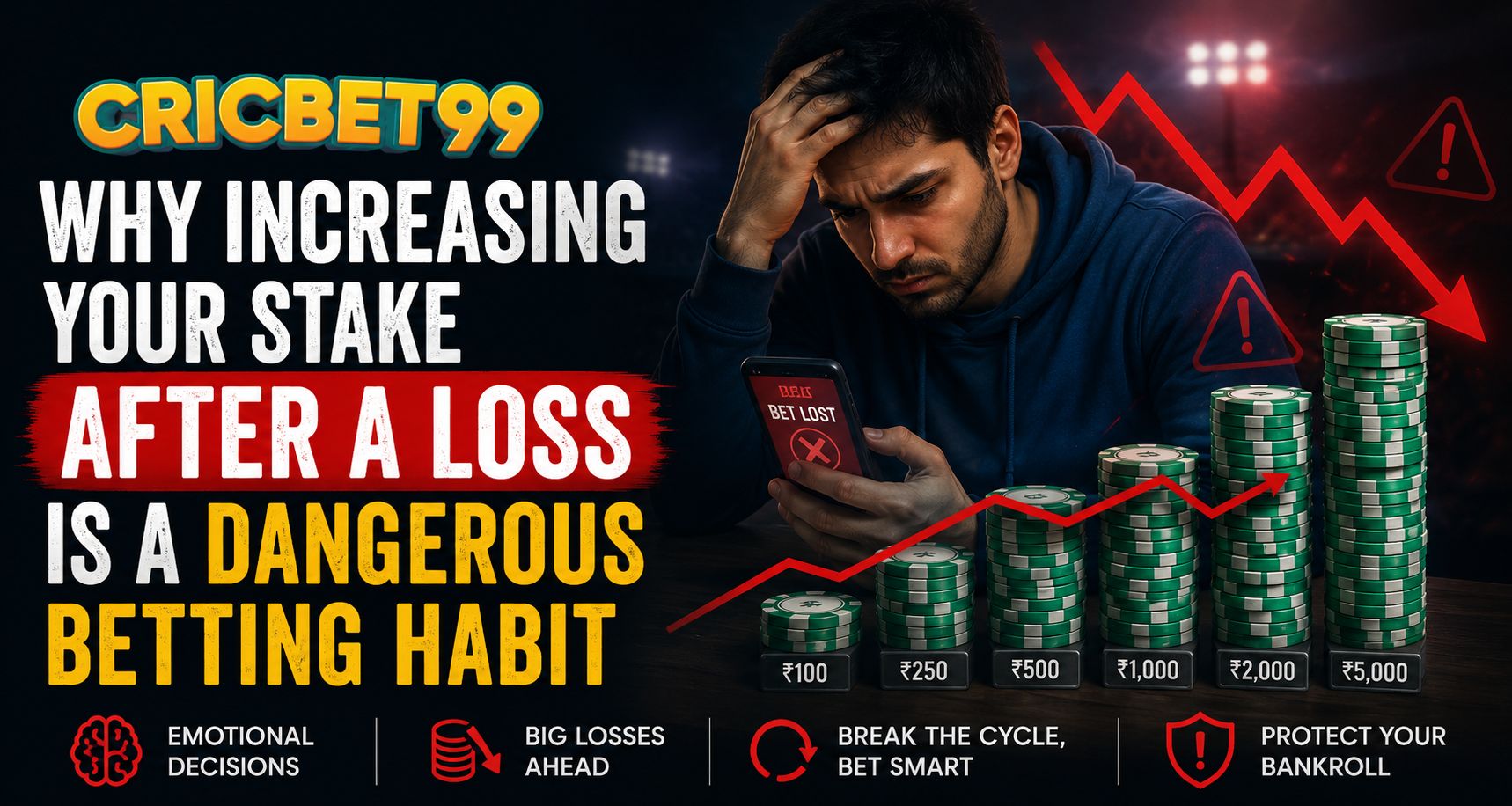
 Why Increasing Your Stake After a Loss Is a Dangerous Betting Habit
 2026-08-18
Losing a bet can be frustrating, especially when the result feels close or unexpected. Some users respond by immediately increasing the amount they stake on the next event in an attempt to recover what was lost. For users exploring markets through Cricbet99, understanding why this behaviour is risky is an important part of responsible betting. Increasing stakes after a loss can quickly turn a manageable setback into a much larger financial problem.
This habit is often known as chasing losses, and it can affect decision-making, bankroll control, and emotional discipline.
What Does Chasing a Loss Mean?
Chasing a loss happens when a person increases their next stake because they want to recover money lost on an earlier wager.
For example, someone might start with a ₹500 bet, lose it, and then decide to place ₹1,000 or ₹2,000 on the next match simply to get back to their original balance.
The problem is that the next result is independent of the previous one. Losing the first wager does not make the second wager more likely to succeed.
Users returning through a Cricbet99 Login should therefore treat each betting decision separately rather than allowing an earlier loss to determine the size of the next stake.
Why Increasing Stakes Can Escalate Losses Quickly
Larger stakes mean larger possible losses.
If a user continues doubling or significantly increasing the stake after every unsuccessful result, the amount at risk can rise very quickly.
Consider a simple sequence:
- First stake: ₹500
- Second stake: ₹1,000
- Third stake: ₹2,000
- Fourth stake: ₹4,000
- Fifth stake: ₹8,000
After only five losing selections, the total loss would already be ₹15,500.
This shows how quickly a loss-chasing pattern can become difficult to control.
Emotional Decisions Can Replace Logical Decisions
One of the biggest risks after a loss is emotional decision-making.
People may experience:
- Frustration
- Anger
- Urgency
- Overconfidence
- Fear of finishing the day down
- A strong desire to “win it back”
These emotions can affect how carefully the next event is evaluated.
When using Cricbet99 Com or any similar platform, a better approach is to decide stake limits before the activity begins rather than changing them because of a recent result.
A Previous Loss Does Not Improve the Next Bet
A common mistake is believing that a win is somehow “due” after several losses.
Sports results do not work that way.
Each match, market, or event has its own uncertainty. A team that appears strong can still lose, a favourite can underperform, and unexpected events can change the outcome.
Increasing a stake because the previous wager failed does not increase the accuracy of the new prediction.
This is why disciplined bankroll management matters more than trying to recover losses immediately.
Why Bigger Stakes Can Damage Your Bankroll
A bankroll is the amount of money someone has deliberately set aside for betting.
Good bankroll control generally means keeping individual stakes small relative to the total amount available.
Chasing losses does the opposite. It can expose a large percentage of the bankroll to a single event.
For users considering Cricbet99 Online Betting markets, useful bankroll habits include:
- Setting a fixed spending limit
- Using consistent stake sizes
- Never using money needed for bills
- Avoiding borrowed money
- Stopping when a predefined loss limit is reached
- Taking breaks after emotional results
These rules can reduce the chance of one bad sequence becoming financially damaging.
Why the “Double the Next Bet” Strategy Is Risky
Some people believe that doubling the stake after each loss guarantees eventual recovery.
It does not.
Even a strategy that assumes one future win will recover earlier losses can fail because:
- Losing streaks can last longer than expected
- Account limits may prevent further increases
- The required stake can become unaffordable
- Different odds change the calculation
- One large loss can wipe out many earlier small wins
Anyone using a Cricbet99 Betting Site should understand that no staking progression can remove the underlying uncertainty of the sporting result.
Set Loss Limits Before You Start
One of the simplest ways to reduce loss chasing is to decide in advance how much you are prepared to lose.
A practical limit could include:
- Maximum amount per session
- Maximum stake per selection
- Maximum daily or weekly loss
- Fixed number of bets
- Mandatory break after a certain loss
The important point is that these limits should be set before emotions become involved.
Changing limits after losing usually defeats their purpose.
Take a Break After a Frustrating Result
Not every loss requires an immediate response.
A short break can help remove the feeling that the next bet must repair the previous one.
During the break, users can:
- Step away from live markets
- Review whether the planned limit has been reached
- Avoid checking odds repeatedly
- Return only when the decision feels calm and deliberate
If betting starts creating stress or financial pressure, a longer break or self-exclusion tool may be more appropriate.
Warning Signs That Loss Chasing Is Becoming a Problem
Certain behaviours can indicate that staking is becoming difficult to control.
Watch for signs such as:
- Increasing stakes after nearly every loss
- Depositing more than originally planned
- Using money reserved for essential expenses
- Borrowing money to continue betting
- Hiding losses from others
- Feeling unable to stop until money is recovered
These are reasons to stop and use responsible-gambling support tools rather than increasing risk.
Conclusion
Increasing your stake after a loss can feel like a quick way to recover money, but it usually creates more risk rather than more control. Previous losses do not improve the chances of the next selection, while larger stakes can rapidly damage a bankroll.
A safer approach is to use fixed limits, keep stakes consistent, avoid emotional decisions, and accept that losses are a normal possibility in betting. Responsible betting means protecting your financial limits rather than trying to force a recovery.
Frequently Asked Questions
What is chasing losses in betting?
Chasing losses means increasing stakes or continuing to bet mainly because you want to recover money already lost.
Does doubling my stake guarantee I will recover a loss?
No. Losing streaks can continue, and the required stakes can grow rapidly beyond affordable levels.
Why is emotional betting risky?
Emotions such as frustration or urgency can lead to larger stakes and poorer decision-making.
Should I set a loss limit before betting?
Yes. A predefined spending and loss limit can make it easier to stop before losses escalate.
What should I do after a frustrating loss?
Take a break, review your limits, and avoid placing another bet simply to recover the previous loss.
When should I consider stopping completely?
If betting is causing financial stress, borrowing, secrecy, or difficulty controlling stakes, taking a longer break or using self-exclusion tools is appropriate.