
 Why Shubman Gill Practiced With Special Balls Ahead of the Galle Test
 2026-08-11
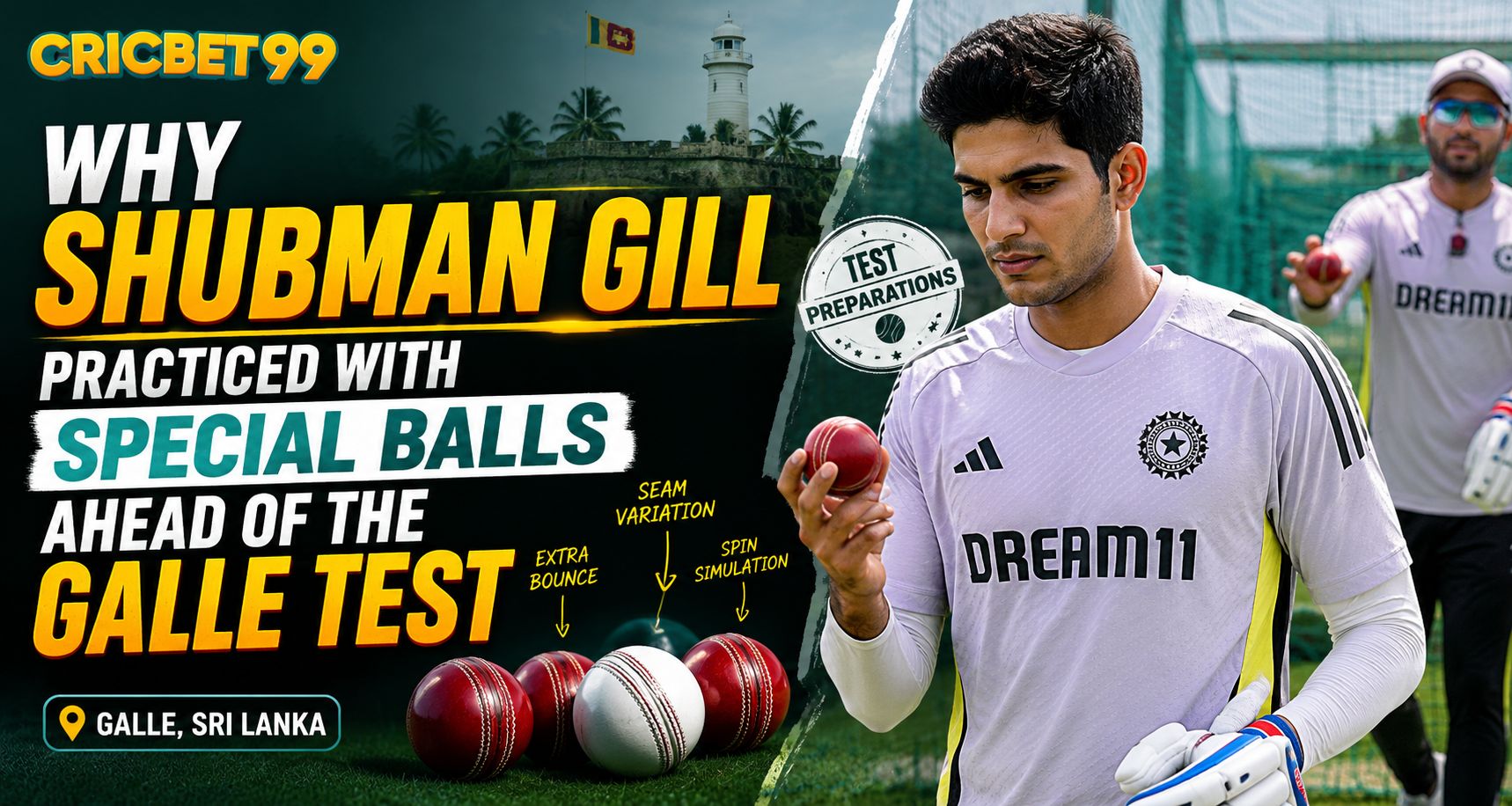
Shubman Gill and India have stepped up their preparations for the opening Test against Sri Lanka with a carefully planned training session in Colombo. For cricket followers tracking the build-up through Cricbet99, one particular drill attracted attention as Gill faced balls of different ages during an intense net session. The purpose was straightforward: India wanted their captain to prepare for new-ball movement, reverse swing and the changing conditions he could encounter during a long Test innings in Galle.
What Were the “Special Balls” Used by Gill?
The term “special balls” may sound unusual, but India were essentially using cricket balls at different stages of wear.
During Gill’s net session, the throwdown specialists used one new ball along with two older balls. That allowed them to repeatedly change the type of delivery he was facing instead of providing the predictable conditions of a conventional batting session.
The drill was designed to expose Gill to:
- Movement from a relatively new ball
- Reverse swing from older balls
- Deliveries that could skid or grip
- Changes in bounce off a worn surface
- Quick adjustments between different challenges
For users following preparations through Cricbet99 Login, the exercise demonstrates how specifically India are trying to recreate possible match situations before the Test.
Why Was Reverse Swing a Major Focus?
Reverse swing can become an important weapon once a cricket ball gets older, particularly when surfaces are dry and abrasive.
India therefore wanted Gill to experience deliveries behaving differently without waiting through a complete innings for the ball to naturally deteriorate.
The practice allowed throwdown specialists to alternate between newer and older balls, forcing Gill to read each delivery quickly. Reports from the session noted that he looked largely comfortable, although a few deliveries either climbed unexpectedly or stayed slightly low.
That unpredictability made the drill especially valuable.
Those checking pre-match analysis through Cricbet99 Com may focus heavily on Sri Lanka's spinners, but negotiating pace and reverse swing could also be important to India's batting success.
India Tried to Recreate a Late-Test Pitch
Gill's special-ball session was only one part of a broader preparation strategy.
India trained on a dry centre wicket containing visible cracks. The surface was intended to resemble something closer to a fourth-day Test pitch, becoming increasingly difficult as the session continued. Batting took place primarily from one end, helping accelerate the wear on the surface.
That created challenges such as:
- Variable bounce
- Increased assistance for spin
- More difficult defensive batting
- Greater importance of footwork
- Pressure on concentration
The spin group of Ravindra Jadeja, Kuldeep Yadav, Manav Suthar and Saransh Jain also completed much of the bowling workload during the session.
For Cricbet99 Online Betting followers assessing conditions before the series, this suggests India's management expects adaptability to be central to the Galle contest.
Why Gill Needed Extra Throwdown Practice
There was another practical reason Gill worked separately with the throwdown specialists.
Auqib Nabi was the main fast bowler operating during the centre-wicket session because Mohammed Siraj, Prasidh Krishna and Gurnoor Brar were rested after their workloads in the three-day warm-up fixture. India therefore needed another way to give Gill sufficient practice against pace.
The throwdown specialists solved that problem by increasing the volume and variety of deliveries he faced.
Gill worked on leaving deliveries outside off stump, defending confidently and playing his familiar drives while regularly adjusting to the age of the ball.
Gill’s Fitness Is Another Positive for India
The session was also encouraging because Gill recently suffered an impact injury to his right ring finger.
Despite that concern, he returned during India's warm-up victory and scored 44. India's coaching staff subsequently indicated that he was ready for the Test series.
Seeing Gill complete another demanding batting session therefore provides further reassurance before the first Test.
Fans following the final preparations through Cricbet99 Betting Site discussions will now be more interested in how he handles Sri Lanka's bowling challenge than whether he will be available.
Why This Preparation Could Matter in Galle
India's first Test against Sri Lanka begins in Galle on August 15, 2026. The updated squad will be led by Gill, with KL Rahul serving as vice-captain.
The captain will need to adjust to different phases of an innings rather than prepare for only one type of bowling.
The new ball could move early, spin could become increasingly influential, and an ageing ball may eventually produce reverse swing. Practising against balls of different ages allows Gill to rehearse those transitions before experiencing them under Test-match pressure.
For Cricbet99 Online Betting readers following the build-up, the drill offers an insight into how detailed modern Test preparation has become.
Final Thoughts
Shubman Gill's “special-ball” practice was essentially a match-simulation exercise rather than the use of any unusual cricket equipment. India gave him one new ball and two older balls so he could repeatedly switch between conventional movement and potential reverse swing.
Combined with a dry, cracked practice pitch and heavy exposure to spin, the session was designed to replicate some of the problems India expect to encounter during the Galle Test.
For followers using Cricbet99 Login or checking updates on Cricbet99 Com, the encouraging takeaway is that India's captain appears fit and is preparing specifically for multiple bowling threats.
The Cricbet99 Betting Site audience may naturally debate India's final XI, but Gill's preparation shows that the team's focus is already moving beyond selection and towards executing plans under difficult conditions.
FAQs
What special balls did Shubman Gill use in practice?
Gill faced one new ball and two older balls during his net session in Colombo.
Why did Gill practice with older balls?
The older balls were used to help him prepare for possible reverse swing and changing ball behaviour during a Test innings.
Was the practice pitch designed to resemble Galle conditions?
India trained on a dry, cracked surface intended to become progressively harder for batting, helping simulate later stages of a Test match.
Is Shubman Gill fit for the first Sri Lanka Test?
Yes. Gill returned from his finger injury concern in the warm-up match, and India's coaching staff has indicated he is ready for the series.
When does the first India vs Sri Lanka Test begin?
The first Test begins at Galle on August 15, 2026.